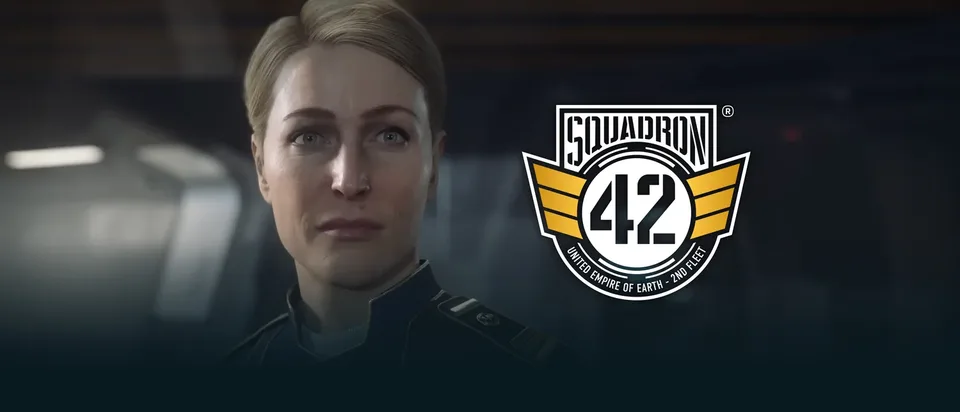
Squadron 42 vs Star Citizen: Key Differences and Gameplay Evolution
Discover how Squadron 42 compares to Star Citizen, exploring campaign mechanics, flight models, and shared engine tech based on recent creator playtests.
Published: Squadron 42 Wiki Editorial Team
Table of Contents
Understanding the Relationship Between Squadron 42 and Star Citizen
When discussing space simulation and narrative gaming, the debate surrounding Squadron 42 vs Star Citizen often surfaces. While both titles share a foundational universe and core technology developed by Cloud Imperium Games Ltd, they serve entirely different purposes.
Squadron 42 is structured as a dedicated, narrative-driven single-player campaign. It offers a structured military sci-fi experience reminiscent of classic wing-commander titles, complete with cinematic productions, scripted missions, and deep character interactions. In contrast, Star Citizen operates as a persistent online multiplayer universe focused on sandbox freedom, trading, and open-ended exploration.
Recent community reports and creator playtest impressions have shed light on how these two projects intersect, particularly regarding engine features that will eventually benefit both titles. For players trying to understand what sets them apart, looking at technical advancements, combat systems, and structural design provides a clear picture.
Core Structural Differences: Narrative Campaign vs. Open Universe
The most immediate distinction lies in how players interact with the game world. Squadron 42 is not an open-world sandbox; it relies on a mission-based cadence where players live aboard a capital ship, such as the Idris, between operations.
According to community reports, players have the freedom to walk around, interact with fully voiced crew members, and develop relationships over time. This structure mirrors classic companion-focused roleplaying games rather than MMO space grinders.
Squadron 42 (Single-Player Campaign)
Focused on a linear, cinematic military story with hand-crafted missions, detailed NPC routines, and structured progression. You can check the official details on the Squadron 42 Steam Store Page.
Star Citizen (Persistent Universe)
Focused on open-world multiplayer gameplay, sandbox trading, emergent player encounters, and continuous exploration across planetary systems.
Flight Model and Quantum Travel Improvements
One of the most anticipated technical comparisons involves the updated flight model. Community feedback indicates that Squadron 42 introduces streamlined mechanics that could redefine travel across both games.
Quantum boost and quantum travel now utilize a streamlined single-button activation system without charging delays. Players can maneuver while boosting, creating a fluid movement style akin to high-speed cruising in other modern space titles. Additionally, navigating quantum travel requires dodging spatial anomalies to maintain stability and prevent ship damage.
Single-Button Quantum Travel: Faster engagement with zero charge-up time.
In-Flight Maneuvering: Ability to adjust trajectory while boosting.
Quantum Hazards: Obstacles along travel routes that demand active pilot evasion.
Maelstrom Destruction and Tactical Combat
Combat mechanics represent a major leap forward, largely driven by the implementation of the Maelstrom destruction system. According to player impressions, this tech goes far beyond cosmetic damage, introducing granular physics to armor and environment interaction.
In ground and ship engagements, Maelstrom allows projectiles to impact armor plating, shatter glass, and pierce destructible cover. Players can no longer rely on flimsy barriers during firefights, as enemies are capable of shooting through weak materials. Furthermore, enemy AI behavior has been noted as highly aggressive, utilizing suppressing fire, reviving downed allies, and forcing players to adapt their tactics.
Tip
When fighting enemies in tight corridors, do not trust standard canvas or thin partition walls for cover. The advanced bullet-penetration mechanics mean hostile fire will reach you through destructible surfaces.
Graphics, Performance, and Hardware Demands
Graphically, playtesters have praised Squadron 42 as one of the most visually striking titles in the genre, highlighting detailed facial animations, improved lighting, and readable physical cockpit controls.
Early performance benchmarks from testing environments noted stable frame rates around 60 frames per second at native 4K resolution, though these tests utilized high-end hardware configurations featuring top-tier GPUs like the RTX 5090. While upscale technologies and lower resolution settings will determine accessibility for more standard rigs, the visual fidelity sets a high bar for future engine updates heading into the persistent universe.
Frequently Asked Questions
Is Squadron 42 an open-world game?
No, Squadron 42 is a linear, narrative-driven single-player campaign with a mission-based structure. It takes place aboard capital ships and specialized environments rather than a seamless open sandbox.
Will Squadron 42 features come to Star Citizen?
Yes, core engine developments, including the new flight model, Maelstrom destruction physics, and enhanced AI behaviors, are expected to transition into Star Citizen over time.
How many difficulty settings are available?
Playtest reports indicate that the game features three distinct difficulty levels that can be adjusted independently for flight combat and first-person shooter segments.